AI Features Every HR Software Should Have in 2026 (And the One Most Are Missing) #
Every HR Platform Has AI Now. Most of It Looks the Same. #
The global HR technology market hit $40.5 billion in 2025 and is growing fast1. Every major player is racing to embed AI. Workday launched hundreds of Illuminate AI agents across HR and finance workflows2. Rippling built AI into its unified workforce platform. BambooHR, Gusto, ADP, and HiBob all ship AI features now.
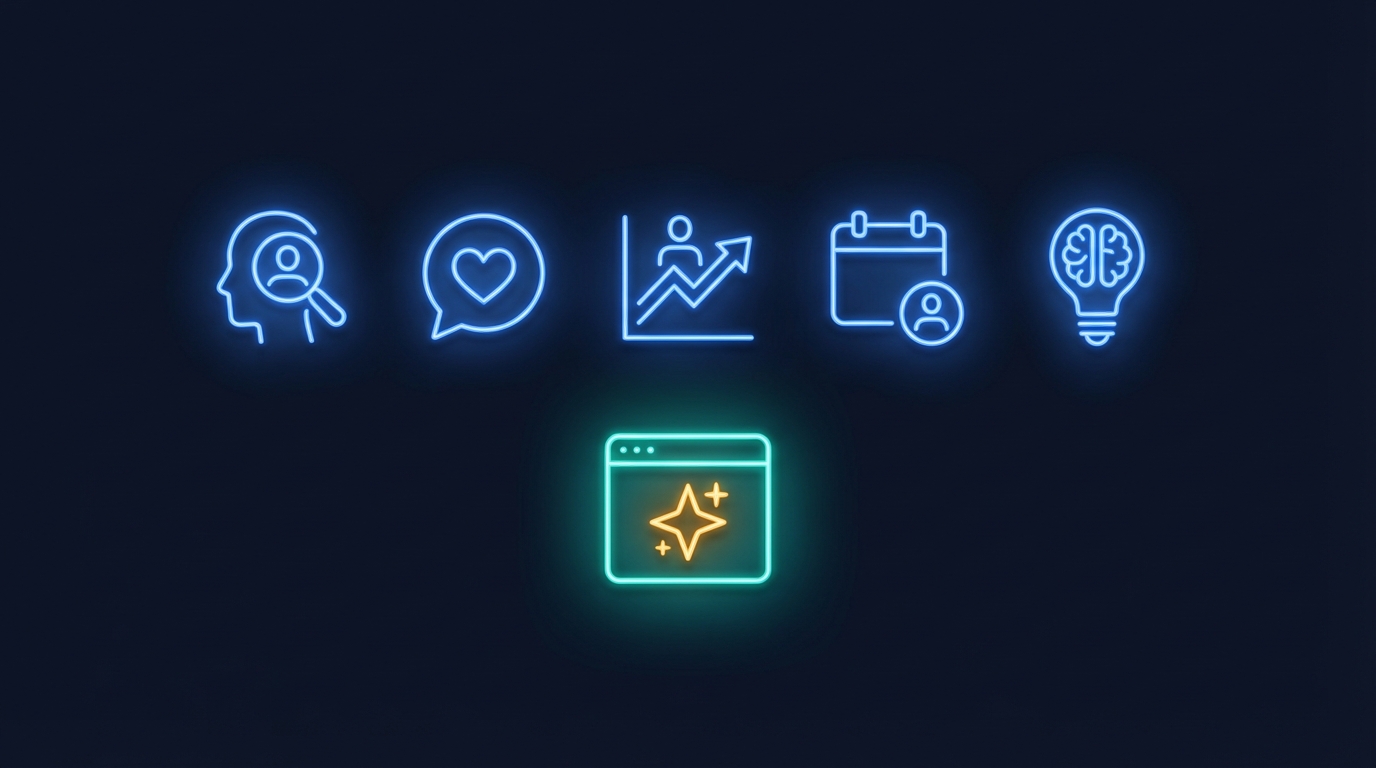
Over 80% of HR departments are expected to use generative AI or predictive analytics in daily operations by 20263. But here's what most comparison guides won't tell you: nearly every HR platform ships the same five categories of AI features. Resume screening, employee self-service chatbots, sentiment analysis, workforce analytics, and onboarding automation. Useful, yes. Differentiated, no.
The one feature that actually changes the retention equation is the one almost nobody offers yet: letting each customer build their own workflow apps inside the HR platform. This guide covers what every HRIS has, what the best ones do differently, and the feature category that will separate winners from losers over the next two years.
Key Takeaways
- Businesses with highly engaged employees are 23% more profitable than those with disengaged teams4. The impact of good HR tooling is real, but only when it matches actual workflows.
- Every major HR platform now ships the same 5 AI feature categories. The differentiation gap has collapsed.
- 88% of HR tech leaders reported no significant ROI from their AI initiatives5. The problem isn't AI itself. It's generic AI that doesn't adapt to how each company operates.
- The missing feature: customer-facing app generation. One production deployment of this approach achieved 90.8% adoption and 89% day-30 retention.
What Are the 5 Standard HR Software AI Features in 2026? #
The global AI adoption rate for human resource management is 21% and climbing fast6. The features HR teams are using fall into five predictable categories. Here's what each one does and who does it best.
1. AI-powered resume screening and candidate matching #
AI parses resumes, ranks candidates by fit, and matches skills to job requirements. It reduces time-to-fill by eliminating manual resume review for high-volume roles.
Who does it well: Workday Skills Cloud uses AI and machine learning to match candidates against skills taxonomies, not just keyword matching. Rippling's recruiting module auto-screens applicants across its unified data platform. BambooHR integrates AI-driven applicant tracking that scores candidates contextually. ADP's Workforce Now uses AI to surface top candidates and reduce hiring bias.
2. Employee self-service chatbots and AI assistants #
Conversational AI that answers employee questions about benefits, PTO balances, company policies, and payroll. Works 24/7 without routing every question to HR.
Who does it well: Workday's Illuminate assistant handles natural language queries across HR, payroll, and benefits. BambooHR's "Ask BambooHR" provides instant HR answers with embedded AI for trend insights and content search7. ADP Assist uses generative AI agents that think, plan, and take action with human oversight8. Rippling's AI assistant surfaces answers from across its unified HR, IT, and finance data.
3. Employee sentiment analysis and engagement surveys #
AI analyzes pulse survey data, internal communications, and feedback patterns to flag disengagement risks before they become attrition events. Managers get early warning signals.
Who does it well: Workday Peakon Employee Voice uses machine learning to analyze engagement trends and predict flight risk. BambooHR surfaces AI-driven insights from employee satisfaction data. HiBob's engagement tools use analytics to identify team-level sentiment shifts. Culture Amp and Lattice integrate as specialized add-ons with most HRIS platforms.
4. Workforce analytics and predictive planning #
AI forecasts headcount needs, identifies skills gaps, and models workforce scenarios. The goal is to replace spreadsheet-based HR planning with data-driven projections.
Who does it well: Workday Adaptive Planning uses AI to model workforce scenarios across departments and geographies. ADP DataCloud provides benchmarking analytics powered by payroll data from over 40 million workers. Rippling's analytics layer connects HR, IT, and finance data for cross-functional workforce insights. Visier integrates with most HRIS platforms as a specialized people analytics layer.
5. Automated onboarding workflows #
AI personalizes onboarding sequences based on role, department, and location. It auto-assigns training, provisions accounts, schedules check-ins, and tracks completion without manual HR coordination.
Who does it well: Rippling is the standout here, automating onboarding across HR, IT, and finance from a single trigger: device provisioning, app access, payroll enrollment, and benefits selection all happen automatically. BambooHR offers customizable onboarding templates with AI-driven task sequencing. Gusto automates onboarding for small businesses with integrated payroll setup, tax form collection, and benefits enrollment. Workday Journeys orchestrates personalized onboarding experiences at enterprise scale.
How Does Workday AI Compare to Rippling AI? #
Workday processes HR and finance data for over 10,000 customers including more than 60% of the Fortune 5009. Rippling has built a unified workforce platform that connects HR, IT, and finance on a single data layer. These represent two fundamentally different approaches to AI in HR. Here's how they differ.
Workday Illuminate #
Workday's AI strategy centers on Illuminate, a suite of AI agents embedded across the platform. Agents can execute multi-step HR workflows: screen candidates, surface compensation insights, analyze engagement data, and recommend actions. It's powerful but enterprise-focused. Configuration requires understanding Workday's data model, security groups, and business process framework. Best for large organizations with dedicated Workday administrators.
Workday's advantage is data depth. With one of the largest proprietary datasets of HR and finance transactions in the world, its models train on patterns most competitors can't access. The trade-off is complexity and cost. Implementation timelines measure in months, not days.
Rippling AI #
Rippling's approach is fundamentally architectural. Instead of building AI on top of siloed HR data, Rippling built a unified data graph that connects employee records, device management, app provisioning, payroll, and spend management. AI features pull from this connected layer, which means an insight about headcount can automatically inform IT provisioning or finance planning.
The advantage is speed and breadth. A mid-market company can deploy Rippling's full stack and get AI-powered automation across HR, IT, and finance without stitching together point solutions. The trade-off: Rippling is newer to enterprise-scale deployments and lacks Workday's depth in complex compliance scenarios.
The pattern both share #
Both Workday and Rippling are adding AI that makes the vendor's product smarter. Neither is adding AI that makes the product different for each customer. Every account gets the same resume screener, the same chatbot, the same analytics dashboard. That works for generic HR processes. It breaks for companies with specialized workflows around shift management, compliance reporting, or industry-specific credential tracking.
Why Do All These HR AI Features Look the Same? #
73% of customers expect better personalization as technology advances10. Yet every major HR platform delivers identical AI features to every customer. A healthcare system, a construction company, and a SaaS startup all get the same resume screener, the same onboarding flow, the same engagement survey analyzer.
Why? Because vendor-built AI features are designed for the average customer. They have to work for thousands of accounts without breaking for any of them. That means no industry-specific compliance logic, no company-specific shift rules, no team-specific credential tracking requirements.
The result is a shrinking differentiation gap. If every HRIS has the same five AI features, choosing between them comes down to price and ecosystem, not capability. That's bad for vendors trying to retain customers and bad for buyers who need workflows tailored to how their company actually operates.
What would change the equation? Not better versions of the same five features. Something structurally different.
What Is the AI Feature Most HR Software Is Missing? #
88% of HR tech leaders reported no significant ROI from their AI initiatives5. That number hides a critical detail: the ROI problem comes from AI that doesn't match actual workflows, not from AI that's poorly built.
The missing feature is customer-facing app generation. Instead of giving every HR platform customer the same AI features, let each customer build workflow apps tailored to their specific HR processes.
What this looks like in practice #
A healthcare HR team opens their HRIS, types "show me nurses with expiring certifications in the next 60 days, grouped by department, with one-tap renewal reminders," and gets a working app connected to their real employee data.
A construction company HR manager types "build me a crew scheduling tool that shows available workers by trade certification, site proximity, and overtime hours this pay period," and gets a custom tool their vendor-built HRIS doesn't offer.
A restaurant chain's HR director types "create a shift swap approval board where managers can see coverage gaps, approve swaps, and auto-update payroll in one view," and gets something their HRIS's scheduling module could never produce because it's too specific to their operation.
Each of these is a real workflow that a real HR team needs. None of them exist as standard HRIS features because they're too niche for any vendor to build for one customer. But they're exactly the kind of tool that drives daily usage, and daily usage is what prevents churn.
Why this is different from customization #
Traditional HR software customization means configurable fields, report builders, and admin-defined workflows. Those are useful but limited. They don't generate new applications. They rearrange existing ones.
Customer-facing app generation creates entirely new tools: focused, single-purpose apps that connect to the HRIS's real data and inherit its security model. The customer describes what they need in plain English. AI builds it. It goes live the same day.
For more on how this works technically, see our guide on vibe coding for enterprise.
Does Customer-Facing App Generation Actually Work? #
Gigacatalyst, a YC-backed white-label AI app builder, powers this pattern in production for B2B SaaS platforms. The results across 946 users: 90.8% adoption rate (users opened at least one custom app), 89% day-30 retention, and over 670 microapps built by customers for workflows the core product roadmap couldn't prioritize.
Those adoption numbers are significantly higher than typical HR software feature adoption. Standard HRIS features see 30-50% adoption rates for new releases. 90.8% adoption suggests the demand for workflow-specific tools was already there. The product just needed a way to absorb it.
The apps customers built were specific, not complex. A credential expiration tracker. A shift handoff checklist. A new hire equipment request form. An overtime liability calculator. Each one solved a problem too niche for the core product but real enough that someone would switch vendors without it.
For HR software vendors, the implication is clear: the AI feature that produces the highest retention lift isn't a better chatbot or a smarter resume screener. It's the ability to let each customer shape the product to fit how their company actually runs.
If you're evaluating how to add this to your own product, the white-label AI app builder guide covers the architecture and integration process. For a broader framework on AI integration levels, see how to add AI to your B2B SaaS.
How Should You Evaluate HR Software AI Features in 2026? #
The HR software market is forecasted to reach over $410 billion by 2025 when including broader HCM categories11. If you're evaluating HR software AI features, here's a practical framework that goes beyond the standard comparison table.
For buyers evaluating HR tools #
Ask these questions of every vendor:
- Which AI features are generic vs. customizable? Sentiment analysis trained on your company's feedback data is more valuable than sentiment analysis using a generic model.
- Can I build workflow-specific tools? If your HR processes have steps that don't map to the HRIS's default modules, you need a way to build those workflows yourself.
- Does the AI learn from my data over time? The best HR AI gets smarter as you use it. If the model is static, you're paying for features that don't compound.
- What's the adoption rate among my team's persona? An AI feature is only valuable if your HR staff and managers actually use it. Ask for usage data, not just feature lists.
For HR software builders adding AI to their product #
The five standard features are table stakes. Your competition already has them. To differentiate:
- Let customers build their own apps. This is the highest-impact feature nobody else offers yet.
- Inherit your security model. Every AI-generated app must respect existing permissions and data access controls.
- Include an app marketplace. Distribution matters more than generation. Let customers discover and share what others have built.
See Gigacatalyst in Action
We build the AI platform layer that sits on top of B2B SaaS products and lets customers create their own workflow apps. Connected to real data. Governed by your security model.
Gigacatalyst is a white-label AI app builder that B2B SaaS companies, including HR platforms, embed into their product. Let your customers build the workflow apps your roadmap can't prioritize. Backed by Y Combinator. See how it works →
Footnotes #
-
HiringThing. "2026 HR Tech Statistics to Know." https://blog.hiringthing.com/hr-tech-statistics 2026. ↩
-
Workday Blog. "Workday Delivers Next Wave of Agentic AI to Power the New Work Day." https://blog.workday.com/en-us/workday-delivers-next-wave-agentic-ai-power-new-work-day.html 2026. ↩
-
Staffbase. "Discover the Top AI Trends in HR for 2026." https://staffbase.com/blog/ai-trends-hr-2026 2026. ↩
-
Gallup. "Employee Engagement Statistics." Cited in Hirex, "12 Employee Engagement Statistics to Track in 2026." https://gethirex.com/blog/12-employee-engagement-statistics-to-track-in-2026 2026. ↩
-
CIO. "The State of AI in HR: Big Promises, Uneven Reality." https://www.cio.com/article/4150722/the-state-of-ai-in-hr-big-promises-uneven-reality.html 2025. ↩ ↩2
-
Hirex. "50 Statistics on Artificial Intelligence in HR in 2026." https://gethirex.com/blog/50-statistics-on-artificial-intelligence-in-hr 2026. ↩
-
BambooHR. "BambooHR Connect 2025 Showcases Major AI Expansion." https://www.bamboohr.com/about-bamboohr/press-release/connect-2025-showcase 2025. ↩
-
ADP Media Center. "ADP Accelerates AI Leadership with Launch of New AI Agents." https://mediacenter.adp.com/2026-01-28-ADP-R-Accelerates-AI-Leadership-with-Launch-of-New-AI-Agents-Designed-to-Solve-Workforce-Challenges 2026. ↩
-
Workday. "AI in HR: Applications, Benefits, and Examples." https://www.workday.com/en-us/topics/ai/ai-in-hr.html 2026. ↩
-
Salesforce. "What Are Customer Expectations?" https://www.salesforce.com/small-business/what-are-customer-expectations/ 2025. ↩
-
Select Software Reviews. "100+ Critical HR Statistics and Trends for 2026." https://www.selectsoftwarereviews.com/blog/hr-statistics 2026. ↩