AI app builder validation matters more than the first demo, because the failure mode is not a bad prototype. It is a customer-built app that looks right and then calls the wrong API, writes the wrong field, or breaks under real usage.
That came up on a call with a transportation management SaaS team. They understood the upside of letting sales reps and customers build workflow apps on top of their platform. Then engineering asked the right question: if AI-built apps often have bugs, missing errors, or scalability issues, what checks happen before one reaches a customer?
Key Takeaways
- AI app builder validation should test code, API calls, visual output, permissions, and publishing state before release.
- In one production deployment, governed customer-built apps reached 90.8% activation and 89% day-30 retention.
- The practical goal is not perfect AI. It is a controlled path from generated draft to reviewed, versioned, rollback-safe app.
Why does AI app builder validation matter for SaaS teams? #
AI app builder validation matters because SaaS teams are letting generated software touch real product surfaces, not just mock demos.
A coding model can produce a screen quickly. That does not mean the app is ready for a customer account. The generated app still has to compile, use the right endpoints, respect tenant permissions, handle empty states, fit the host product's UI, and publish in a way admins can undo.
That is why engineering teams get nervous when the builder moves from read-only dashboards to workflows that create or update records. The question changes from "Can it make a page?" to "What exactly can this page do inside our product?"
A useful validation system makes that question boring. It gives product and engineering teams a list of checks they can inspect instead of asking everyone to trust the model.
What did the transportation SaaS call make clear? #
The transportation SaaS call made clear that customer-built apps need a release path, not only a chat interface.
The team asked several questions in a row. How does the app integrate with the platform? Where is it hosted? Can the output become a native module later? Can the app write back to the system? What prevents bugs or scalability problems when a sales rep helps a customer build something?
Those are healthy objections. They mean the team is past the novelty of generation and into the real operating model.
For B2B SaaS, that operating model usually has two builders. Internal teams create the first useful app for a customer or segment. Customers then install, use, fork, or modify it. That only works if the first app is validated enough to become a safe starting point, and if every later change stays inside the same constraints.
What should validation check before publishing? #
A SaaS AI app builder should validate the generated app at several levels before publishing it.
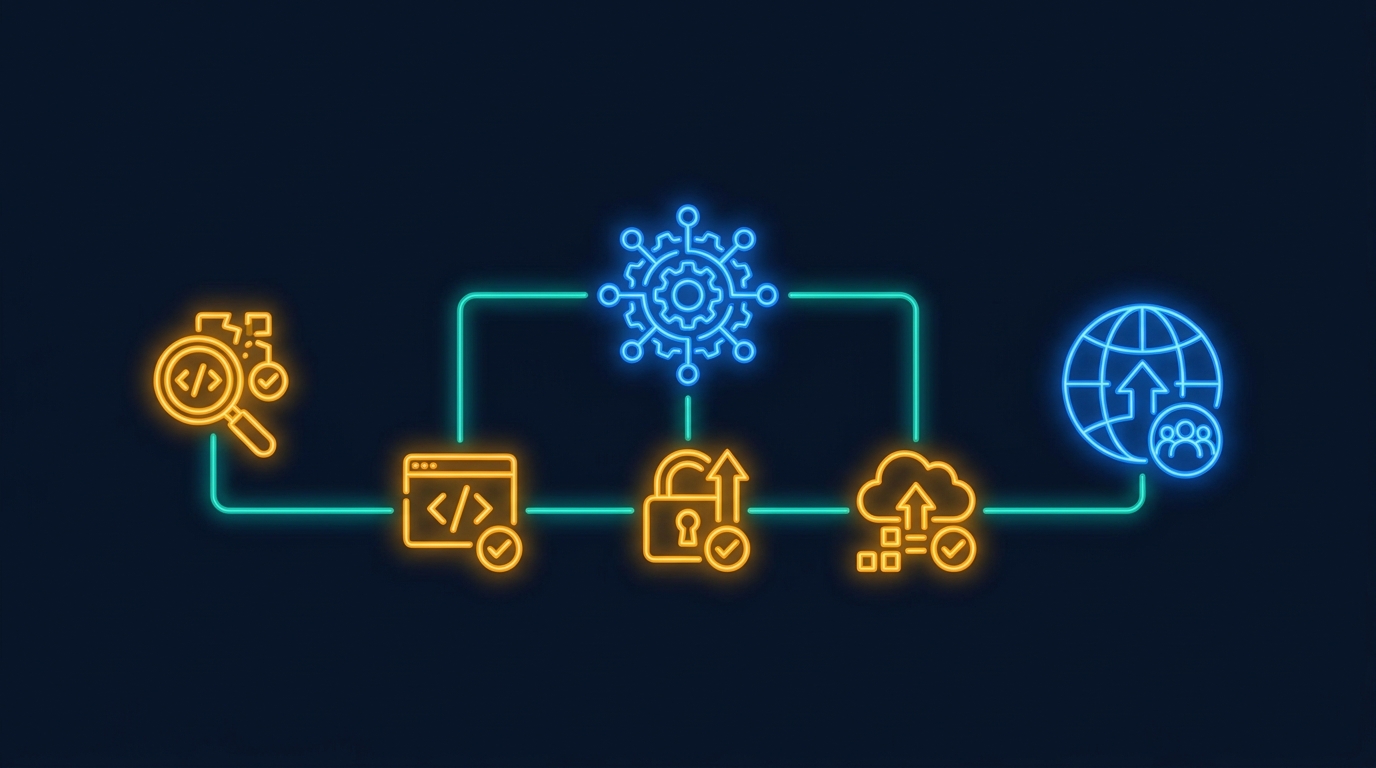
The first level is basic build validation. Does the code compile? Are imports valid? Does the app render without obvious runtime errors? These checks catch the embarrassing failures before a human even reviews the app.
The second level is API validation. The app should call approved endpoints with the right request shape, expected parameters, and safe methods. If the builder can write data, write access should be limited to approved objects and actions. A generated app should not discover a powerful endpoint and use it just because it exists.
The third level is visual and behavior validation. Does the app show useful output? Does it handle empty data? Does it follow the host product's design system closely enough that customers see it as part of the product? For customer-facing SaaS, a broken layout is not cosmetic. It becomes a support issue for the vendor.
How do permissions fit into validation? #
Permissions have to be part of validation because a generated app inherits the trust of the SaaS product around it.
If a user cannot see a shipment, invoice, student record, asset, or customer in the core product, the generated app should not reveal it through a different path. That means auth, tenant boundaries, row-level permissions, and role-based actions need to sit below the generated app, not inside a prompt that asks the model to behave.
The safest pattern is to let generated apps use only the host product's approved APIs and current user context. The app should not get a secret database connection. It should not bypass normal access rules. It should not make the model responsible for deciding which tenant's data is visible.
Validation then checks that the generated app stays within those rails. The SaaS platform remains the authority on who can do what.
How should teams handle bugs after an app is live? #
Teams should assume some generated apps will need changes, so versioning and rollback need to be built into the product flow.
A normal engineering team already works this way. Code is reviewed, released, monitored, and rolled back when needed. Customer-built apps need a lighter version of the same lifecycle. Each published app should have a version. Admins should know which version is installed for which customer. A broken version should be easy to unpublish or roll back without deleting the customer's whole workflow.
This is especially important when an app becomes popular. A private app used by one team can move faster. A shared template or marketplace app needs stricter review because the support blast radius is larger.
The review process does not have to make every app slow. It just has to match the risk of the publish target.
When can a generated app become a native feature? #
A generated app should become a native feature only when usage and customer demand prove that it belongs in the core product.
The transportation SaaS team asked whether they could take the output of a mature customer-built app and integrate it directly into their platform. That is one of the best reasons to have an app layer in the first place.
Generated apps create evidence. Product teams can see what customers installed, what they opened again, what they forked, and which workflows repeated across accounts. That gives product and engineering a cleaner promotion path than a feature request alone.
A reasonable path looks like this:
- private generated app for one customer's workflow
- reviewed template when several customers need a similar workflow
- native module when usage proves the workflow deserves permanent maintenance
That keeps the roadmap from filling with guesses while still letting customers get the workflow they need now.
What should a validation checklist include? #
A practical AI app builder validation checklist should cover the parts of the app that create customer and engineering risk.
Before a generated app is shared broadly, ask:
- Does the code compile and render without runtime errors?
- Are all API calls on the approved list?
- Are write actions limited to approved fields, records, or workflows?
- Does the app inherit the current user's tenant and role permissions?
- Does it handle empty, slow, and failed API responses?
- Is there a published version and a rollback path?
- Is the publish target private, team-wide, customer-wide, or marketplace-wide?
- Is usage logged so Product can decide whether the pattern repeats?
Those checks do not remove the need for human judgment. They make human review smaller and more consistent.
Want customer-built apps with real validation gates?
Gigacatalyst embeds governed AI app building inside B2B SaaS products, with approved APIs, permissions, versioning, and review controls.
FAQ #
Conclusion #
The useful question for SaaS teams is not whether AI can generate an app. It can.
The useful question is what happens between generation and production. If the answer is a blank chat box and a publish button, engineering will say no for good reasons. If the answer is compile checks, approved APIs, inherited permissions, versioning, rollback, and publish review, the conversation changes.
AI app builders become much more useful when they stop asking SaaS teams to trust the model and start giving them normal product controls around generated software.